The Geography of the Detour
Located in southwestern Turkey near the city of Denizli, Pamukkale requires a deliberate detour. It sits roughly three hours inland from the popular coastal hub of Izmir, or a three-to-four hour drive from Antalya. Most visitors arrive via massive tour buses as part of multi-day cross-country itineraries, arriving in waves from mid-morning to late afternoon.
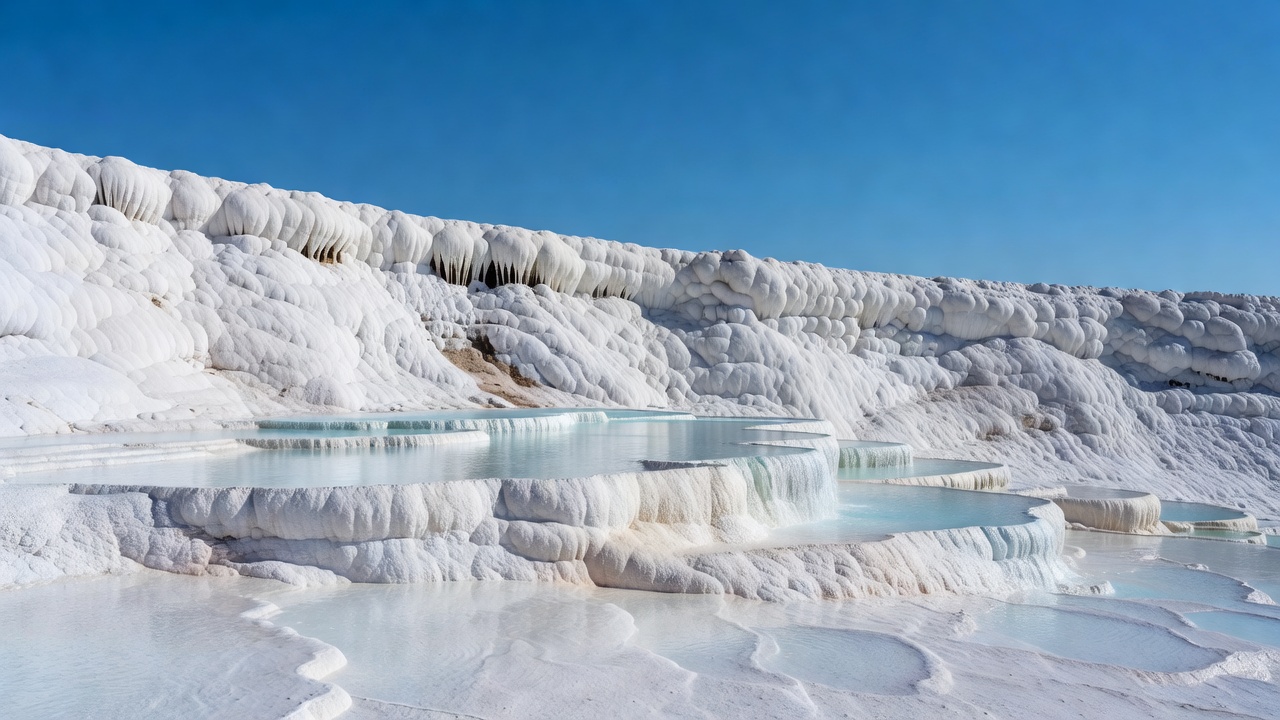
The geological formation itself is created by carbonate minerals left by flowing thermal spring water. Above these striking white cliffs lies the ancient Greco-Roman city of Hierapolis, which historically used the terraces as a spa center. You are essentially visiting a two-for-one UNESCO World Heritage site.
The Modern Experience
To protect the fragile travertine from degradation, authorities drastically changed how visitors interact with the site in the late 1990s. The days of freely swimming in the natural upper pools are gone. Visitors are restricted to walking barefoot along a specific pathway through artificial pools built over a former roadway. Shoes are strictly forbidden to prevent discoloration of the white stone.
Furthermore, to manage the water supply and prevent algae growth, the water is diverted. This means large sections of the hillside you see in older photos may be entirely dry and dull white (or slightly grey) during your visit. The visual impact is still impressive, but managing expectations regarding the volume of water is crucial.
The Ruins of Hierapolis
Often overlooked by those focused solely on the terraces, the ancient city of Hierapolis is magnificent. The exceptionally well-preserved theater, which could seat roughly 15,000 spectators, requires a short uphill hike but offers panoramic views of the site. Cleopatra’s Pool, an operational thermal bath where you can swim among sunken Roman columns (for an additional fee), provides a unique, albeit crowded, historical swimming experience.
The Good
- Highly unique geological phenomenon
- Incredible ancient ruins immediately adjacent
- Beautiful sunset photography
- Accessible walking paths for various fitness levels
The Bad
- Many natural pools are kept dry by management
- Overwhelming crowds from tour buses mid-day
- Walking barefoot on the textured stone can be painful
- Aggressive upselling in the nearby town
Practical Information
Knowing the logistics can mean the difference between a frustrating day trip and a memorable experience.
| Best Strategy | Stay overnight in Pamukkale town; enter the site right at opening to beat buses |
|---|---|
| Footwear | Must be removed for the terraces; bring a bag to carry your shoes |
| Typical Detour Time | 3-5 hours on site |
| Notable Extras | Swimming in Cleopatra's Antique Pool requires a separate entrance fee |
The Verdict: Worth It?
Pamukkale is worth the detour if you appreciate history as much as natural aesthetics. If you are driving three hours purely to recreate an Instagram photo of empty, overflowing blue pools, you may leave disappointed by the crowds and the dry terraces. However, if you view it as a sprawling historical complex—where you can walk barefoot down a strange geological wonder before exploring a massive Roman theater—the site justifies the journey inland.